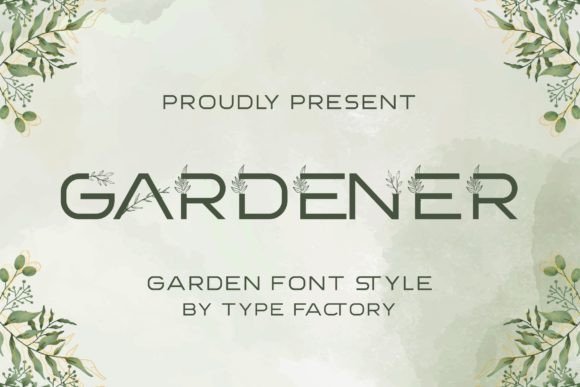
Gardener: A Decorative Display Font for Stand-Out Designs
The Gardener font is a unique and eye-catching decorative display typeface that can elevate any design project. Its elegant and stylized letterforms make it ideal for garden or park-themed designs, branding, logos, and more. Whether you're working on a marketing campaign, a website layout, or a print brochure, Gardener offers a distinctive visual identity that sets your work apart.
Designed with creativity in mind, the Gardener font is PUA encoded, which means users have easy access to all of its glyphs, ligatures, and special characters. This makes it a versatile tool for designers who want to add a touch of whimsy or sophistication to their projects without compromising on quality or functionality.
Understanding the Role of Gardener in Design Workflows
Incorporating the Gardener font into your design process can enhance both the aesthetic and functional aspects of your work. It fits naturally into various stages of a project, from initial concept development to final execution. For instance, during the brainstorming phase, using Gardener can help visualize how a theme or message might look when presented in a stylized format. This can lead to more creative and cohesive outcomes.
During the implementation phase, the font’s unique characteristics can be used to create emphasis or highlight key elements within a design. Whether it's a headline, a call-to-action, or a brand tagline, Gardener adds a level of visual interest that can capture attention and convey a specific mood or tone.
Using Gardener in Different Contexts
The versatility of the Gardener font allows it to be used across a wide range of design contexts. For example, in a digital marketing campaign, it can be applied to social media graphics, email newsletters, or landing pages to create a consistent and memorable brand presence. In print media, it can be used for brochures, posters, or packaging to add a decorative element that complements the overall design.
For personal projects, such as DIY crafts, invitations, or handmade cards, the Gardener font can bring a sense of charm and personality. Its ornate style works well for events like weddings, garden parties, or seasonal celebrations where a touch of elegance is desired.
Integration with Other Tools and Resources
When working with the Gardener font, it's important to consider how it interacts with other design tools and resources. Most graphic design software, including Adobe Photoshop, Illustrator, and Canva, supports custom fonts, making it easy to integrate Gardener into your workflow. Additionally, many design platforms offer font libraries that include this typeface, allowing for seamless access and application.
Collaboration is also a key aspect of design workflows, and using Gardener can help maintain consistency across team projects. By ensuring that all team members have access to the same font, you can avoid discrepancies in typography and maintain a unified visual language throughout the project.
Practical Implementation Tips
To get the most out of the Gardener font, start by understanding the context in which it will be used. Consider the audience, the medium, and the overall message you want to convey. For example, if you're designing for a professional setting, you may want to use Gardener sparingly to maintain a balance between creativity and readability.
Another tip is to experiment with different sizes and weights to find the optimal visual impact. While the font is highly decorative, it may not be suitable for large blocks of text due to its intricate details. Instead, use it for headings, titles, or accent elements where it can shine without overwhelming the reader.
Factors to Consider for Long-Term Use
When planning to use the Gardener font over an extended period, consider factors such as compatibility, scalability, and maintenance. Ensure that the font is compatible with the software and platforms you use regularly. Also, check if it supports multiple languages and character sets, especially if your design work involves international audiences.
Scalability is another important consideration. The font should remain clear and legible at different sizes and resolutions, whether it's being used on a website, a mobile app, or a printed material. Testing the font in various formats can help identify any potential issues before they become problematic.
Enhancing Workflow Efficiency
Integrating the Gardener font into your design workflow can improve efficiency by streamlining the creative process. By having a reliable and visually appealing font available, you can reduce the time spent searching for alternatives and focus more on the overall design concept.
Additionally, using Gardener consistently across projects can help build a strong brand identity. This consistency not only enhances recognition but also reinforces the visual message you're trying to communicate to your audience.
Conclusion: Making Gardener Work for You
The Gardener font is a powerful tool for designers looking to add a unique and decorative touch to their work. Its versatility, ease of use, and visual appeal make it a valuable addition to any design toolkit. By understanding how it fits into your workflow and considering factors such as compatibility, scalability, and consistency, you can effectively leverage Gardener to create standout designs that resonate with your audience.